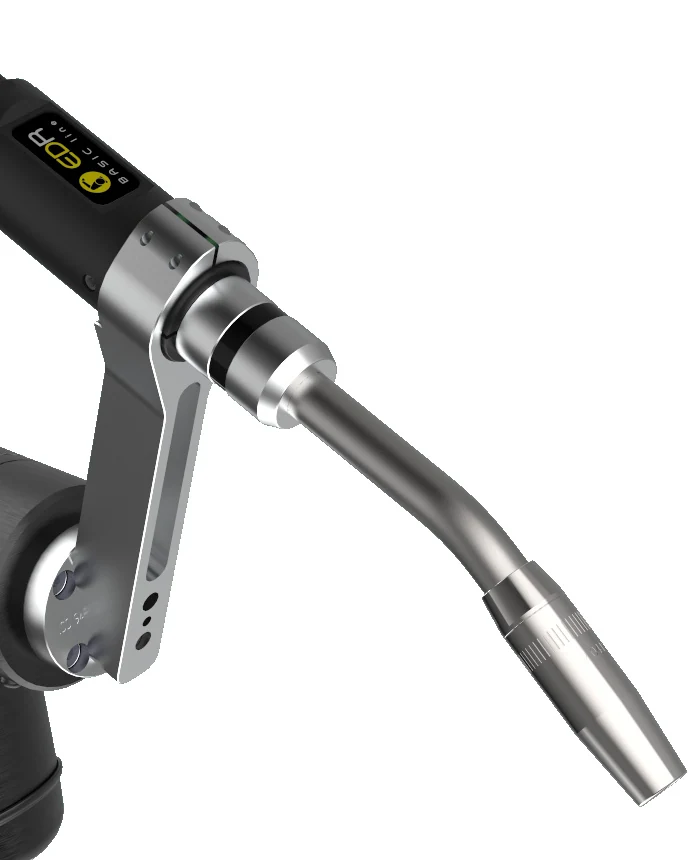
Welding torches designed for cobots
Cobot torches don't need anti-collision systems, so they're lighter and easier to set up. EDR's robust, light necks are calibrated to hold a stable TCP over the life of the torch.
Lower tip costs, faster changeovers, cleaner air
A stainless steel neck structure gives excellent rigidity and keeps the back of the neck cooler, so the torch is easier to handle while keeping the precautions any welding process needs.
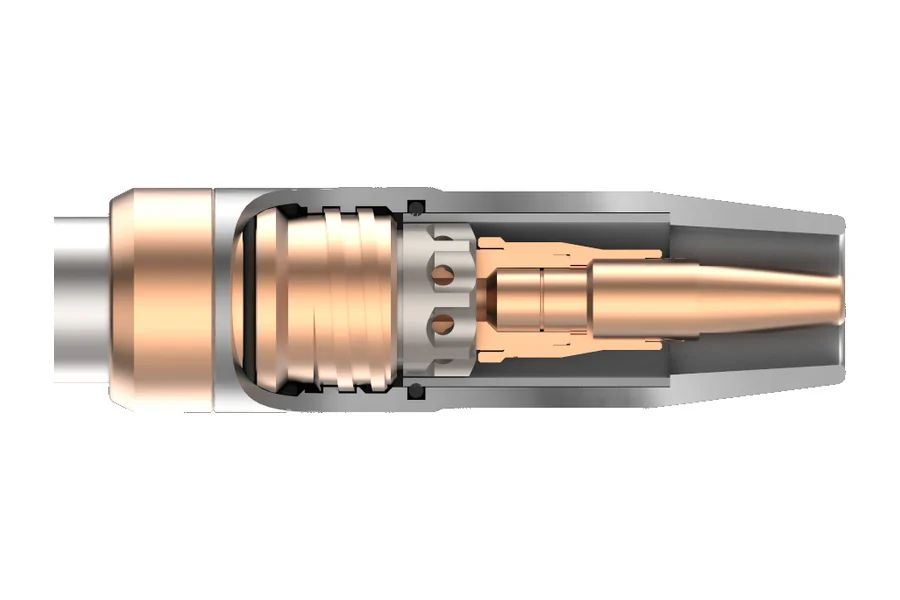
COLDTip
Half the contact tip sits in a cooling chamber, keeping it cool, preserving copper hardness and stopping spatter sticking. Standard tips last 3 to 5 times longer.
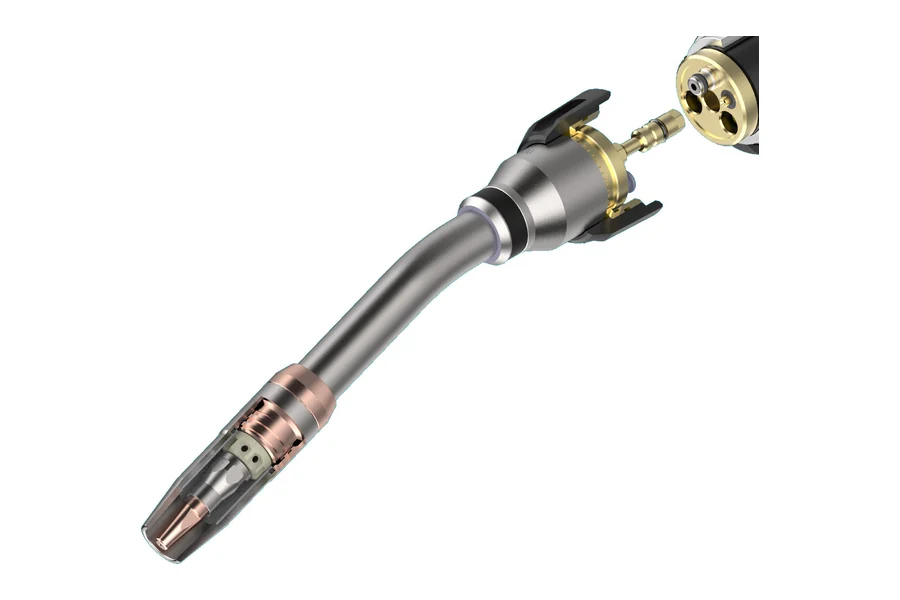
Interchangeable necks
A quick threaded neck change with independent circuits and automatic liquid shut-off valves. A high-temperature seal stops the nozzle loosening and gas leaking at the thread; an eight-hole diffuser improves gas cover and nozzle cooling.
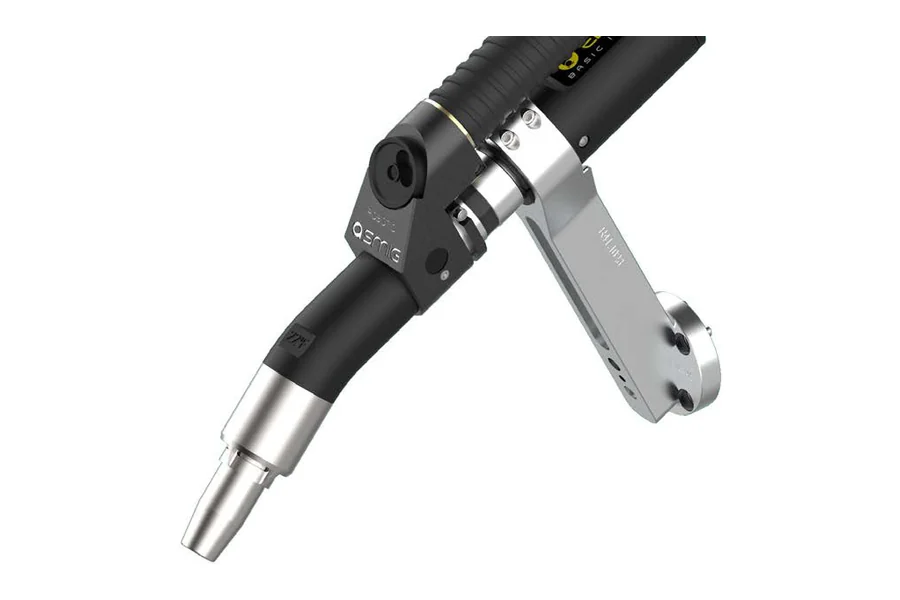
ASMIG fume extraction
Modular on-torch extraction for collaborative and industrial robots. It fits the torch you already have, with no change or reprogramming on BOT series systems.
MIG and TIG torches for cobots and robots
Air-cooled and water-cooled MIG torches in a range of neck angles and lengths, TIG torches for cobots, and an automatic CS2 torch cleaning station for long unattended runs. We'll match the torch to your process, amperage and reach.
See EDR torches in a CoboMate Welder →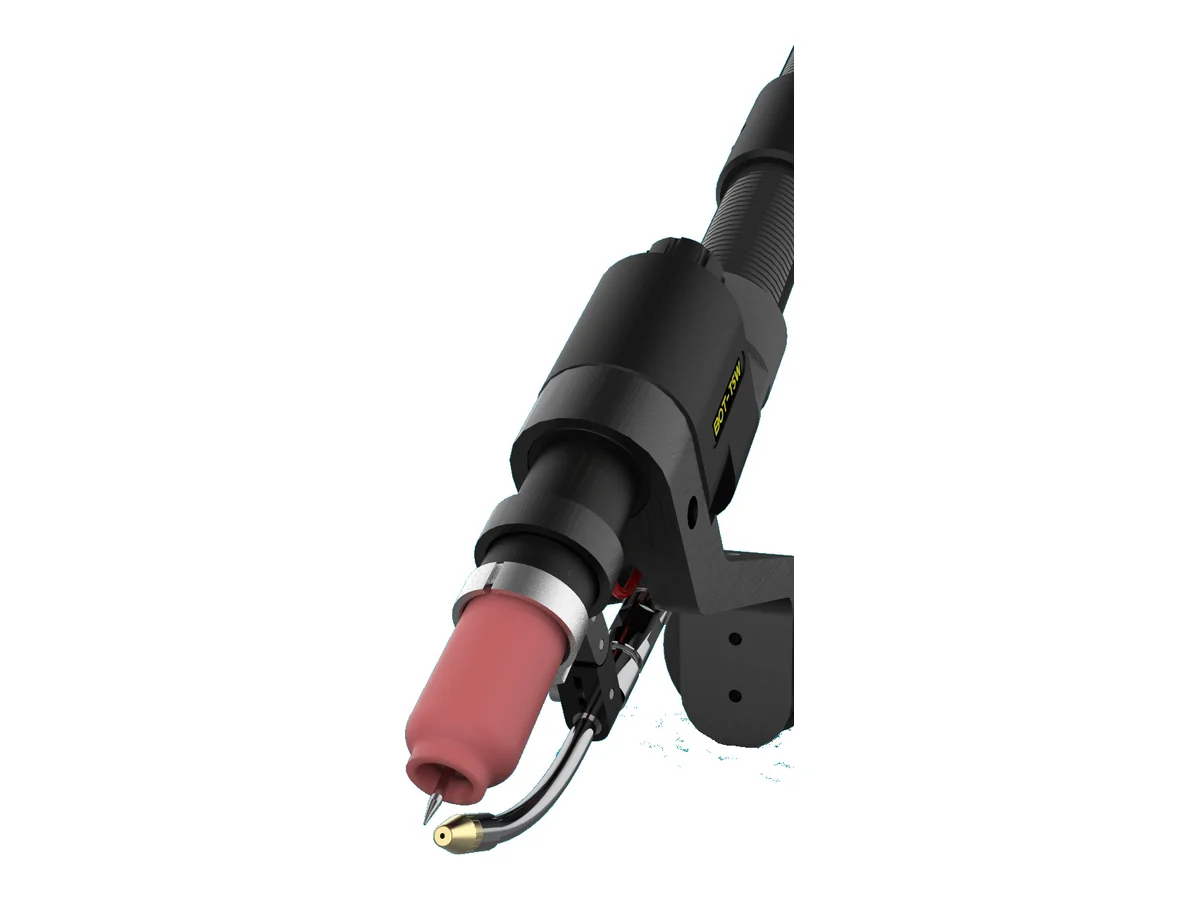
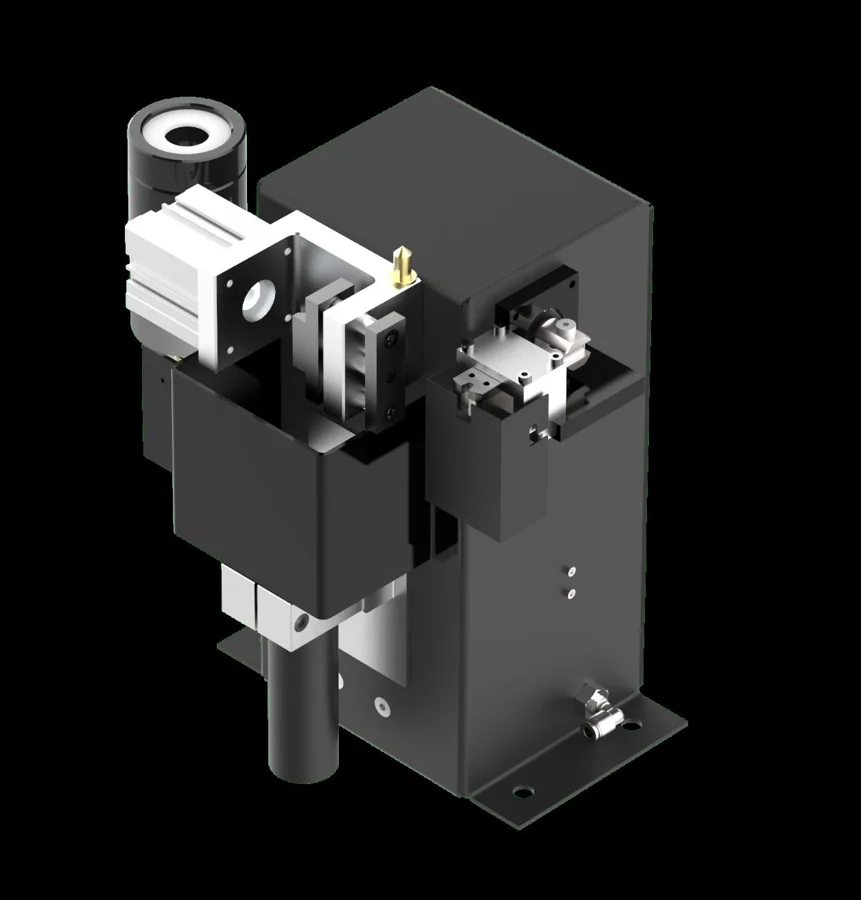
Automatic torch cleaning for long, unattended runs
Spatter builds up inside the nozzle and slowly ruins gas cover and weld quality. The CS2 station lets the cobot clean its own torch between parts, with no operator involved.
Nozzle reaming
An air-driven reamer cleans spatter from inside the nozzle and around the contact tip.
Anti-spatter spray
A light spray after cleaning slows the next build-up. The bottle holds 500 ml.
Wire cutting
Trims the wire to a set stick-out in about half a second: solid wire up to 1.6 mm, flux-cored up to 3.2 mm.
Talks to the cobot
24 V DC signals to and from the robot controller, and a TCP pointer on the housing to check the torch tip position.
Welding fume limits in Australia, and how a cobot cell helps you meet them
Welding fume is classed as a cause of cancer, and Australia's exposure limit for it was cut by 80% in 2024. Extraction is no longer a nice extra on a welding cell.
What the rules say
- Carcinogenic: the World Health Organization's cancer agency (IARC) classifies welding fumes as carcinogenic to humans (Group 1), in its Volume 118 monograph published in 2018.
- 1 mg/m³: Safe Work Australia cut the exposure standard for welding fumes (not otherwise classified) from 5 to 1 mg/m³, averaged over an 8-hour day. WorkSafe Victoria applied it from 18 January 2024.
- Aluminium too: the standard for aluminium welding fumes has also been cut from 5 to 1 mg/m³. Check with your state regulator for when it applies to you.
- Components count: metals in the fume, such as manganese or chromium from stainless steel, have their own limits, which can be lower.
- From 1 December 2026: the exposure standards are replaced by Workplace Exposure Limits (WEL).
What the Code of Practice expects
- Control fume at the source first. Respirators and other PPE are the last line of defence, not the plan.
- Local exhaust ventilation should give a capture velocity of at least 0.5 m/s at the fume source, pulling fume away from the welder, and shouldn't blow extracted air back into the workshop.
- Extractors fitted directly to the welding gun are one of the listed options.
- Air monitoring by a competent person, such as an occupational hygienist, when you're not sure you're under the limit. Records are kept for 30 years.
How we handle fume in a CoboMate cell
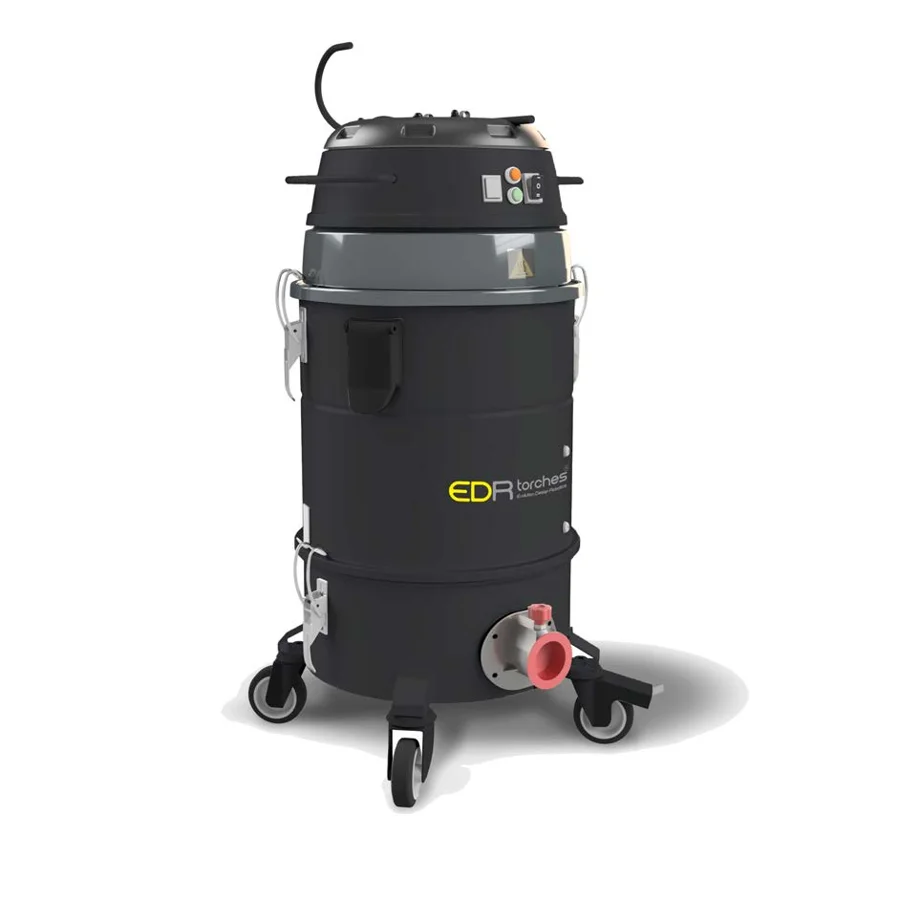
A cobot already moves the operator's head out of the fume plume. We then capture fume at the arc with EDR ASMIG on-torch extraction, fed by a high-vacuum extraction unit with automatic filter cleaning, and add a hood or extraction table where the parts and floor need it.
On-torch extraction works best in the flat and horizontal positions. EDR quotes suction efficiency of about 95% for flat (PA) welds, 90% for horizontal fillets (PB), and as low as 30% overhead (PE). So for positional work we design extra capture around the cell, and we recommend air monitoring after installation to confirm you're under the limit.
General information only, not legal advice. Your state WHS or OHS regulator sets the rules that apply to your workplace.
Sources: IARC Monographs volume 118 · Safe Work Australia: welding fumes exposure standard · WorkSafe Victoria: new standard for welding fume · Safe Work Australia: aluminium welding fumes · Safe Work Australia: changes to Workplace Exposure Limits · Code of Practice: Welding processes (SafeWork SA, based on the Safe Work Australia model code) · EDR ASMIG catalogue
Need a torch for your cobot or robot?
Tell us your robot, welder and process, and we'll quote the right torch, neck and accessories.